Finish What Matters resources
Hey, thanks for reading Finish What Matters. Here are supplemental materials for readers and audiobook listeners.
- Chapter 1: Are You a Leonardo or a Raphael?
- Chapter 3: Shiny Object Strategy
- Chapter 4: Navigating Extremistan
- Chapter 5: The Everlasting Lotto Ticket
- Endnotes
- Acknowledgements
Chapter 1: Are You a Leonardo or a Raphael?
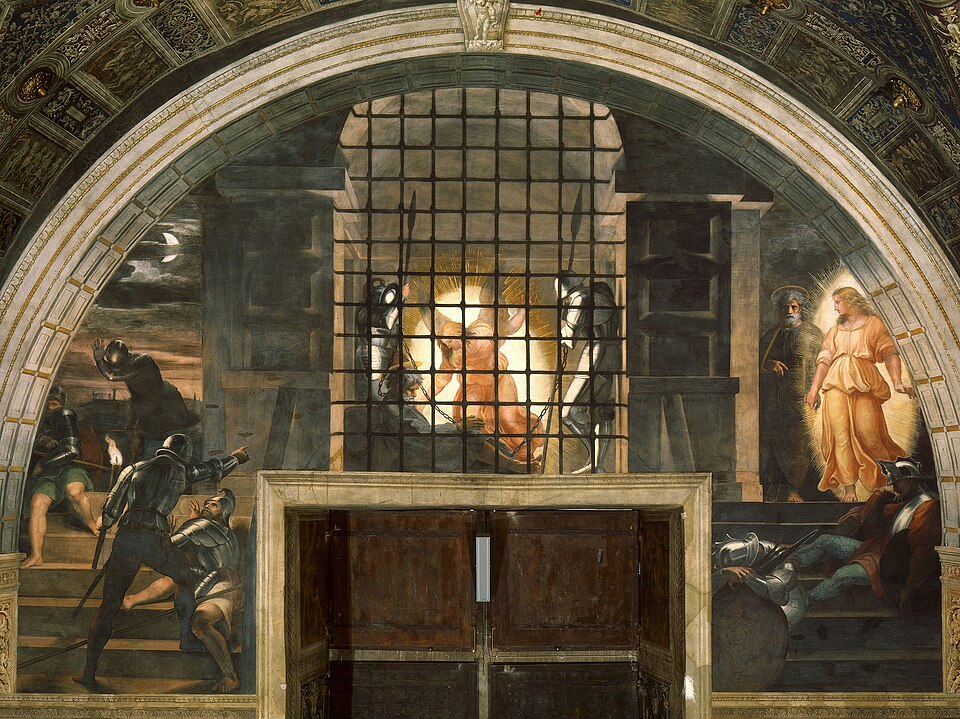
Raphael’s The Liberation of Saint Peter. The cut-out in the middle is a window that faces towards the Belvedere Palace, where Leonardo da Vinci had a studio in 1513.
WANT TO WRITE A BOOK?
Download your FREE copy of How to Write a Book »
(for a limited time)
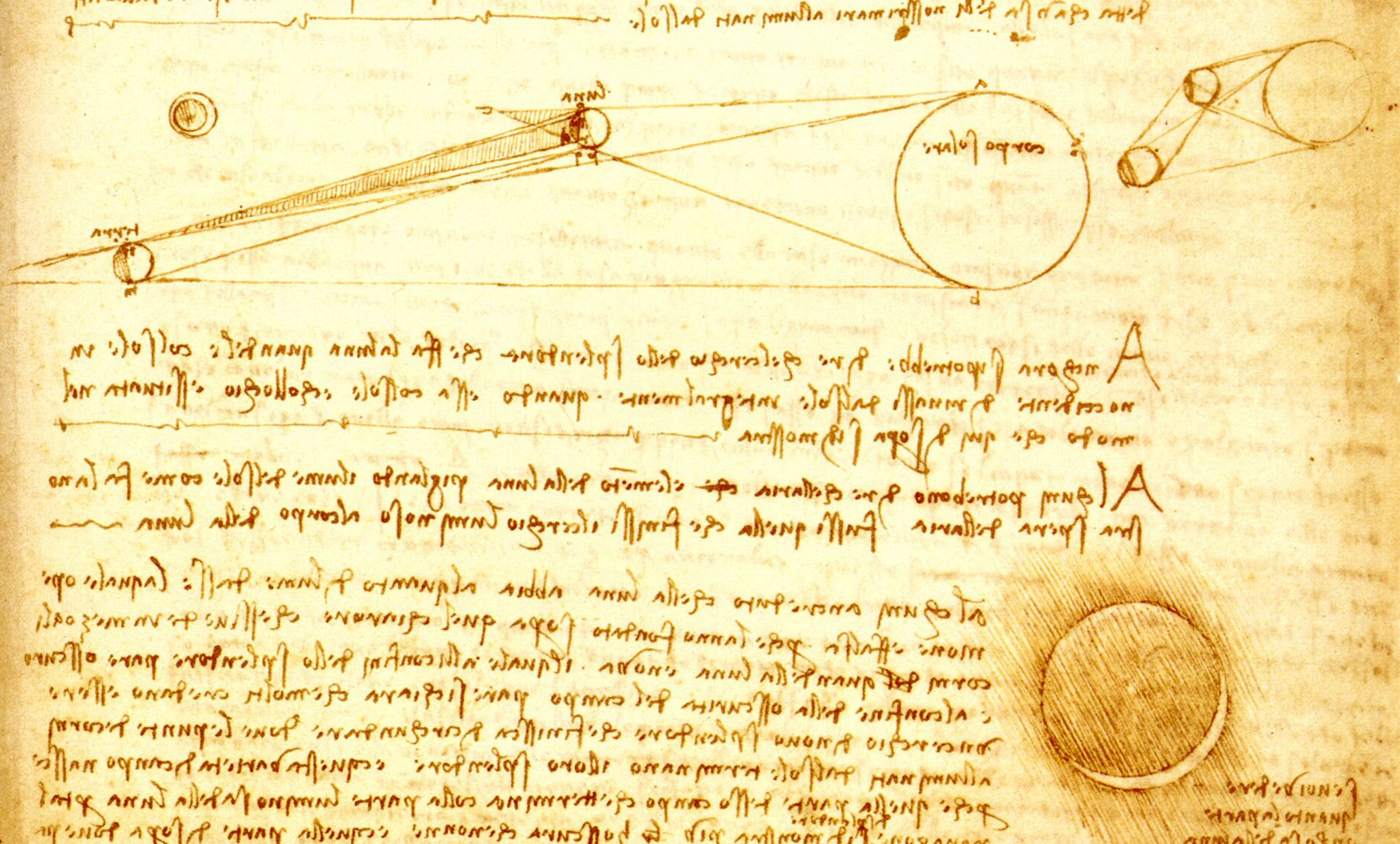
Leonardo’s explanation and depiction of what’s now known as “earthshine.” (Codex Hammer (Leicester) Hammer 2A – Fol.2r)
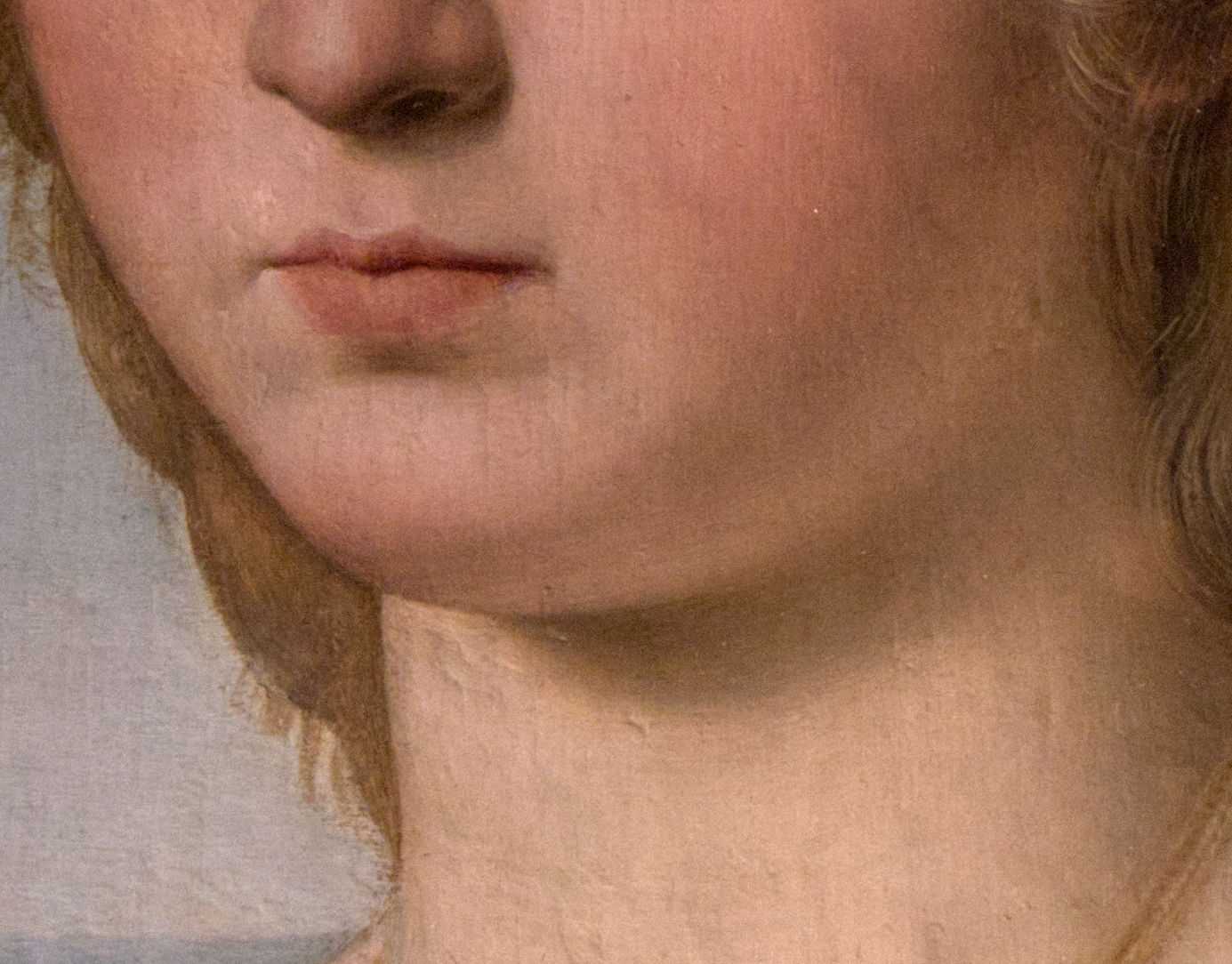
Leonardo used this same knowledge of light and shadow on the underside of the chin of the Mona Lisa. The shadow isn’t totally dark. There’s a lighter area within it.

Raphael’s Young Woman with Unicorn was directly inspired by the Mona Lisa. Notice the three-quarters pose – rather than a profile or a straight-on view, the landscape in the background, and the balcony cutting across the picture.
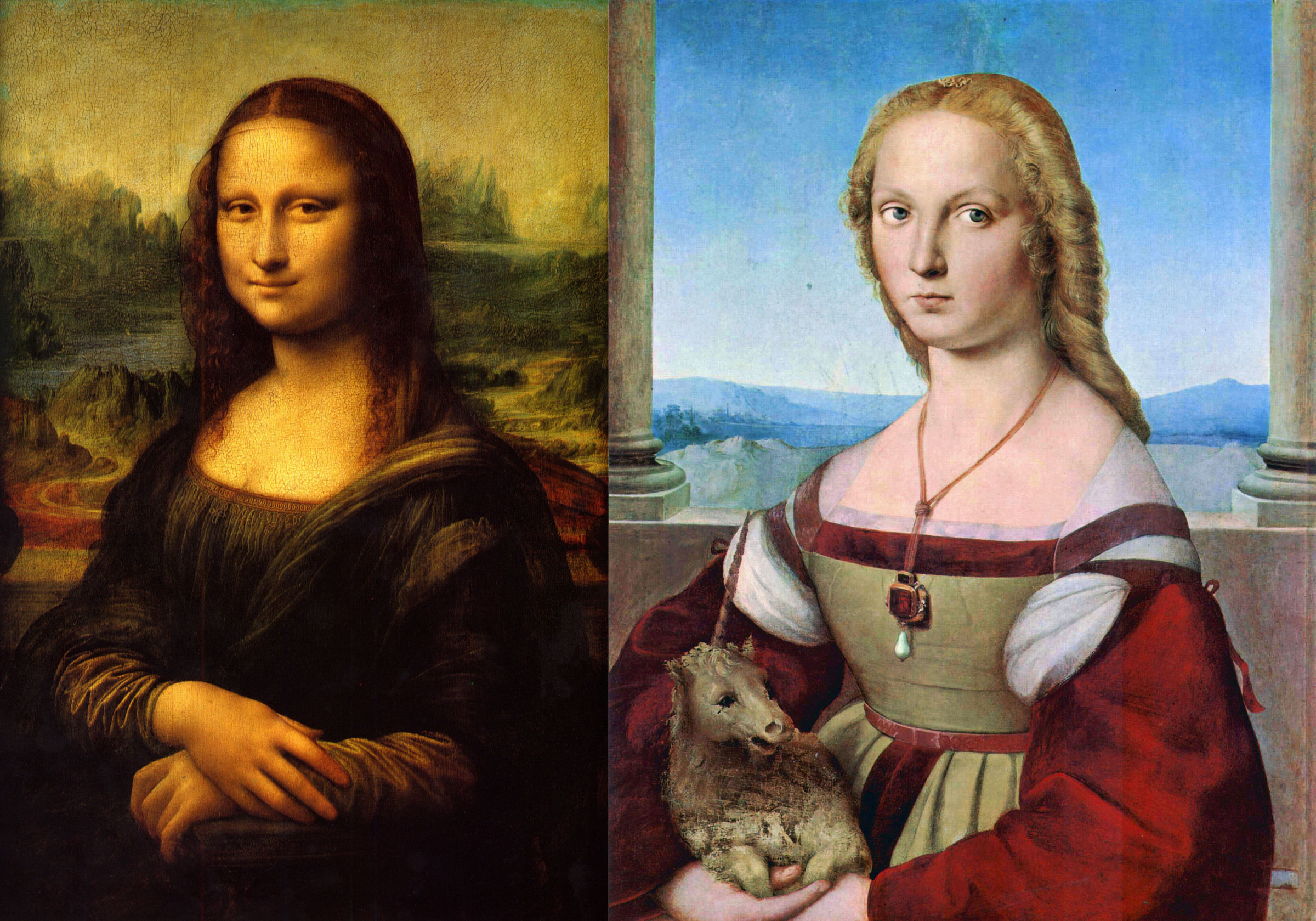
Another way this painting is similar to the Mona Lisa is in how Raphael treated light and shadow. The shadow on the underside of the woman’s chin also has a lighter area within it. In fact, he kind of overdid it.
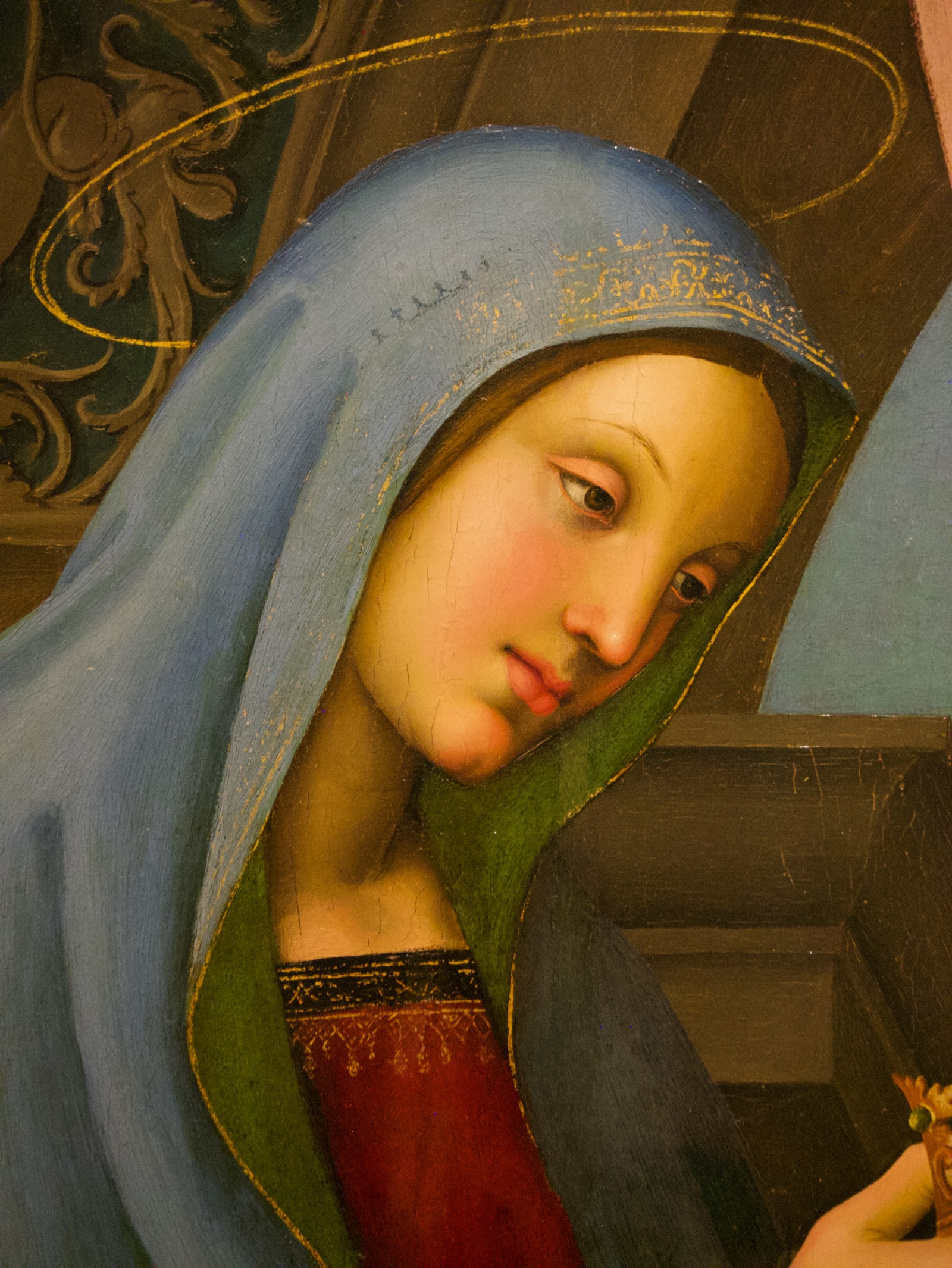
This was a new feature in Raphael’s paintings. The underside of the Virgin Mary’s chin in his first recorded commission, for example, is a simple shadow.
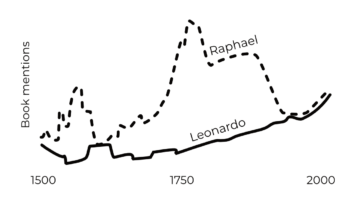
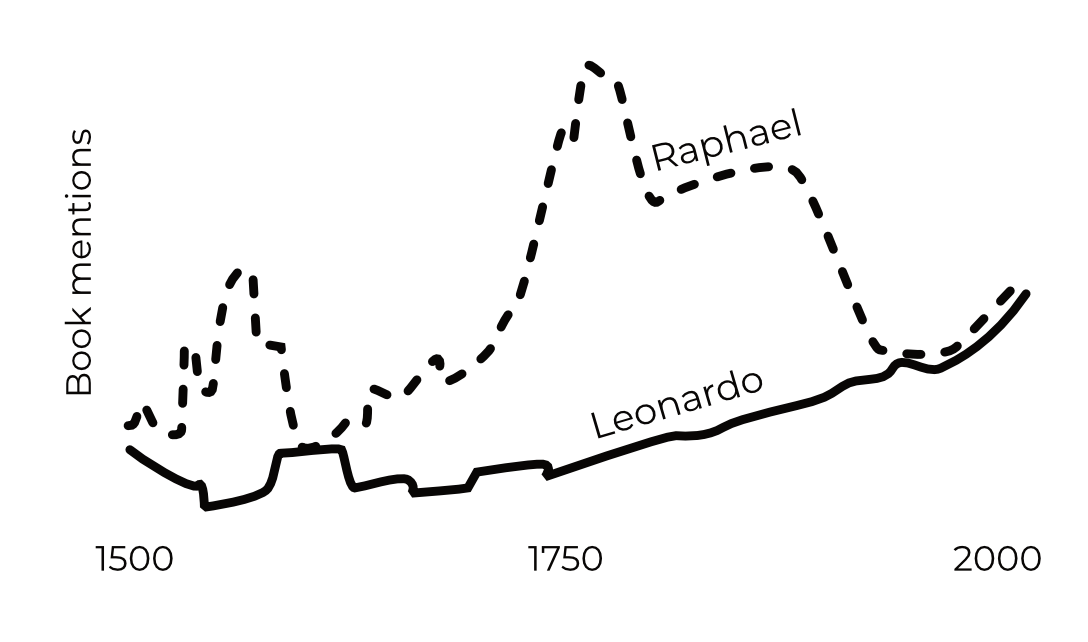
Mentions of Leonardo and Raphael in books over the centuries (redrawn from Google Ngram).
 Chapter 3: Shiny Object Strategy
I’ve also illustrated the following in this article about The Birthday Paradox.
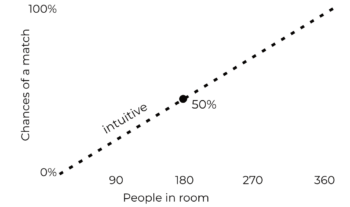
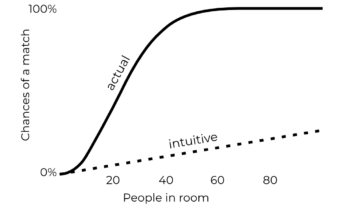
The intuitive odds of the Birthday Paradox suggest to have a 50% chance of a shared birthday, you’d need about 180 people.
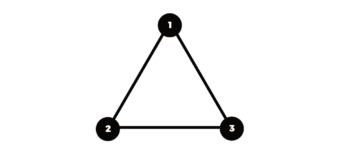
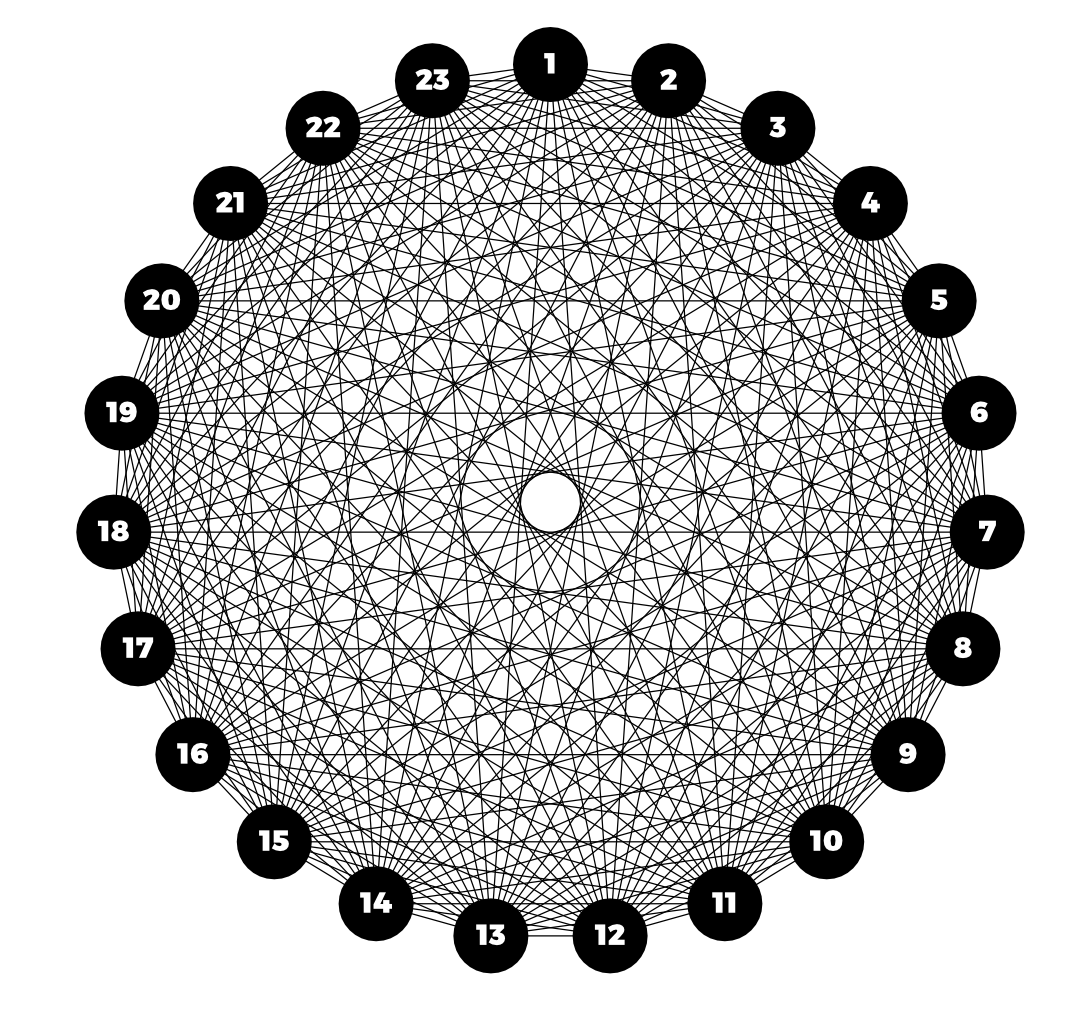
If you have two people in the same room, there’s one potential shared birthday.

If you have three people in the same room, there are three potential shared birthday.
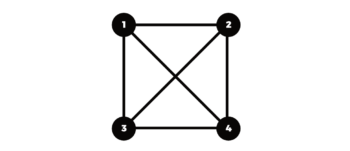
When you go from three to four people, the potential shared birthdays jump from three to six.
When there are twenty-three people in the room, you have 253 potential shared birthdays. (Pretty mind-blowing graphic if you ask me!)
 The odds of a shared birthday rise rapidly, until they’re almost certain at around fifty people (way above the intuitive odds).
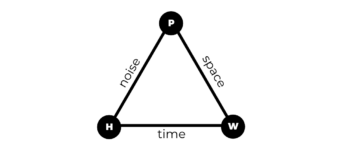
Each area of your life and projects can conflict with one another.
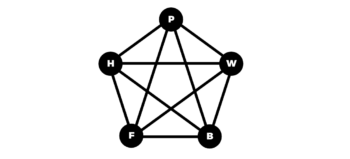
If you have five projects and/or areas of your life, you have ten potential sources of conflict. The potential sources of conflict rise rapidly with each new area or project added.
Chapter 4: Navigating Extremistan
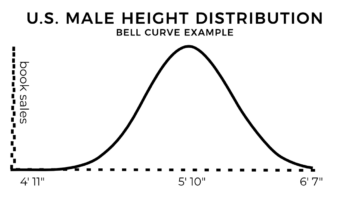
If you chart the distribution of height of U.S. males, you get a classic bell curve. If you do the same with book sales, you practically get a right angle – most books, with very few sales, are bunched up on the left-hand side, while an extremely long tail of the few books with many millions of sales stretch to the end of the distribution.
Sales predictions for Mind Management, Not Time Management
You can see my actual thought process for predicting sales of my previous book, Mind Management, Not Time Management, in my September 2020 income report.
You can see how those predictions actually turned out in my October 2023 income report.
Chapter 5: The Everlasting Lotto Ticket
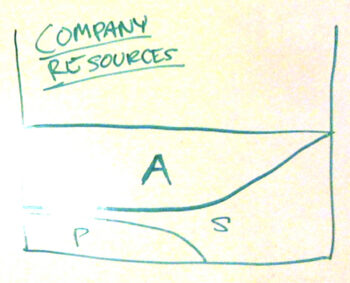
The graph I drew allocating amongst Active, Passive, and Speculative projects. “Company Resources” was my time.