
Subscribe to blog updates via email »
Why there’s too much to do (it’s YOUR birthday, too?)
This article originally appeared on Maximum Reverie »
Two questions that don’t seem related, but are:
- Do you sometimes feel overwhelmed, like there’s too much to do?
- How many people do you need before two have the same birthday?

WANT TO WRITE A BOOK?
Download your FREE copy of How to Write a Book »
(for a limited time)
The birthday problem is a paradox because the solution is unbelievable. The way we get that solution shows us why you have more on your to-do list than you could ever hope to get done.
To be sure of a birthday match, we’d need 366 in a room – one for each day of the year, and one additional person, whose birthday will be the same as at least one of the rest.
The really surprising answer comes when we ask how many we need for a 50% chance of a shared birthday. Intuitively, we want to solve this problem linearly. So if we draw a line from zero people, with zero chance of a match, to 366 people, with a 100% chance of a match, it seems that for a 50% chance, we’d need half that – about 183 people.
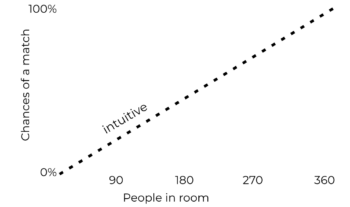
The actual path to the solution shows us why each thing we take on adds more to our to-do lists than we expect.
Is it just “one more thing?”
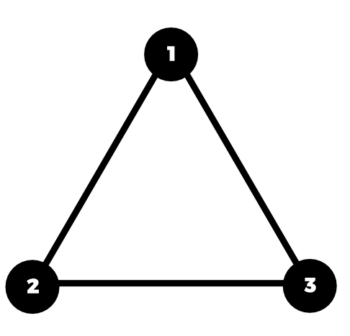
If we start with two people in a room, we have one potential for a match – represented below by a line connecting them.

Notice that if we add just one more person, the number of potential matches triples – from one, to three.
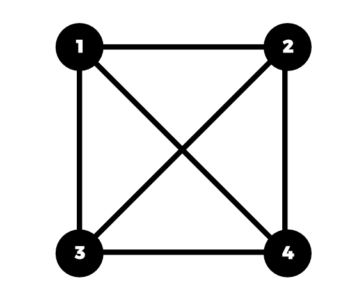
If we again add a person, the number of potential matches jumps again – from three, to six.
Now think of how this rapid increase in connections applies to your life. If you have your home life, your day job, and you start a podcast, there are three different ways these areas can conflict with one another.
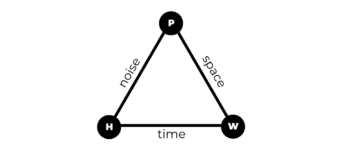
For example, you can only record your podcast when it’s quiet in the house. But it’s only quiet in the house when everyone else is at work or school. But when everyone else is at work or school, you are, too.
Suppose you also want a social life with friends. Now there are not only three ways areas of your life can conflict, there are six.
You can’t work on your podcast during your Monday night dinner with friends, so that eliminates one block of time. You also have to watch the kids during your partner’s night out, so that eliminates another block of time – and you still need it quiet in the house to record your podcast.
The answer is what!?
Every time you add a person to a room, you add not just their birthday, but how that birthday potentially connects to the birthday of each person already in the room.
That’s why, to be half-sure there will be one shared birthday, you need far fewer than 183 people. You don’t even need half that. Heck, you don’t even need half that.
Because the potential connections rise so rapidly, you’re nearly certain to have a shared birthday with just 50 people in a room. From then on, the odds barely rise, until we get to 100%, at 366.
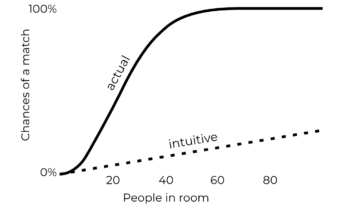
For a 50% chance at least two people in the room share a birthday, you need only 23 people.
At that point, you have 253 potential connections.
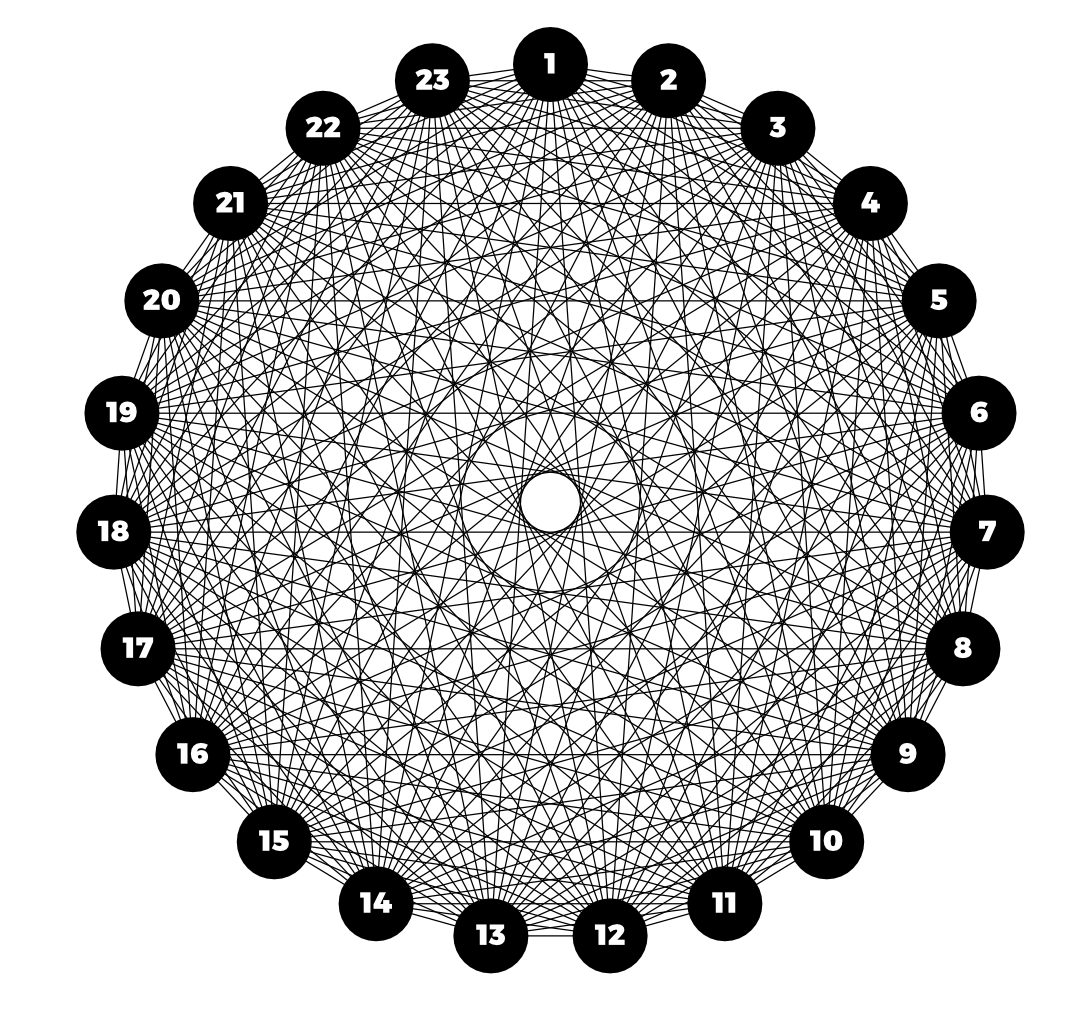
The solution to the birthday problem is unexpected. Heck, it’s shocking. Our brains are not good at understanding how the odds increase. That’s why it’s a paradox.
Of course, life isn’t even this simple, and each area can conflict with each other area in multiple ways, so reality is even more complex.
Your kid wants to take ballet lessons? When can you drive her, and can you still garden on Saturday mornings?
You’re thinking of getting an extra degree? How is that going to affect time with your partner, and the mental energy to do your job?
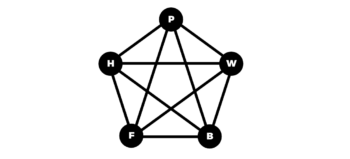
Just as adding a person to the room creates a potential connection between them and everyone else in the room, each time you add something to your life, you aren’t just adding “one more thing.” You’re adding how that one thing can conflict to every other thing.
The good news runs backwards
So what can you do about it? As I was finishing my latest book, I looked at my life and business, and realized I had added “one more thing” so many times, there wasn’t time or energy for writing.
It hurt to cut things, but I reminded myself of the birthday paradox, and turned out pleasantly surprised.
I figured by cutting out my weekly movie and occasional TV show, I could gain a few hours a week. But then something unexpected happened: I had more space to think about my writing, and when I wanted to entertain myself, I found myself picking up a book.
After the snowballing connections shown by the birthday paradox unraveled, I started to see them working in reverse. Thanks to all that reading, it was easier to write. It also turns out reading with your partner is much better quality-time than watching a movie.
The hidden interconnections exposed by the birthday paradox seem like bad news because you have to find the strength to resist taking on “one more thing.” But they also mean the things you keep have more power to feed one another than you ever expected.
Have a comment? Chime in on the original post on Maximum Reverie »